
Unresolved Permission Review and Handoffs
An ambiguous license should stop an asset from moving silently into production. It should not reduce the review to a vague “rights issue” note. A useful commercial use permission record shows what the source states, how the asset will be used, what remains unanswered, and who handles the next step.
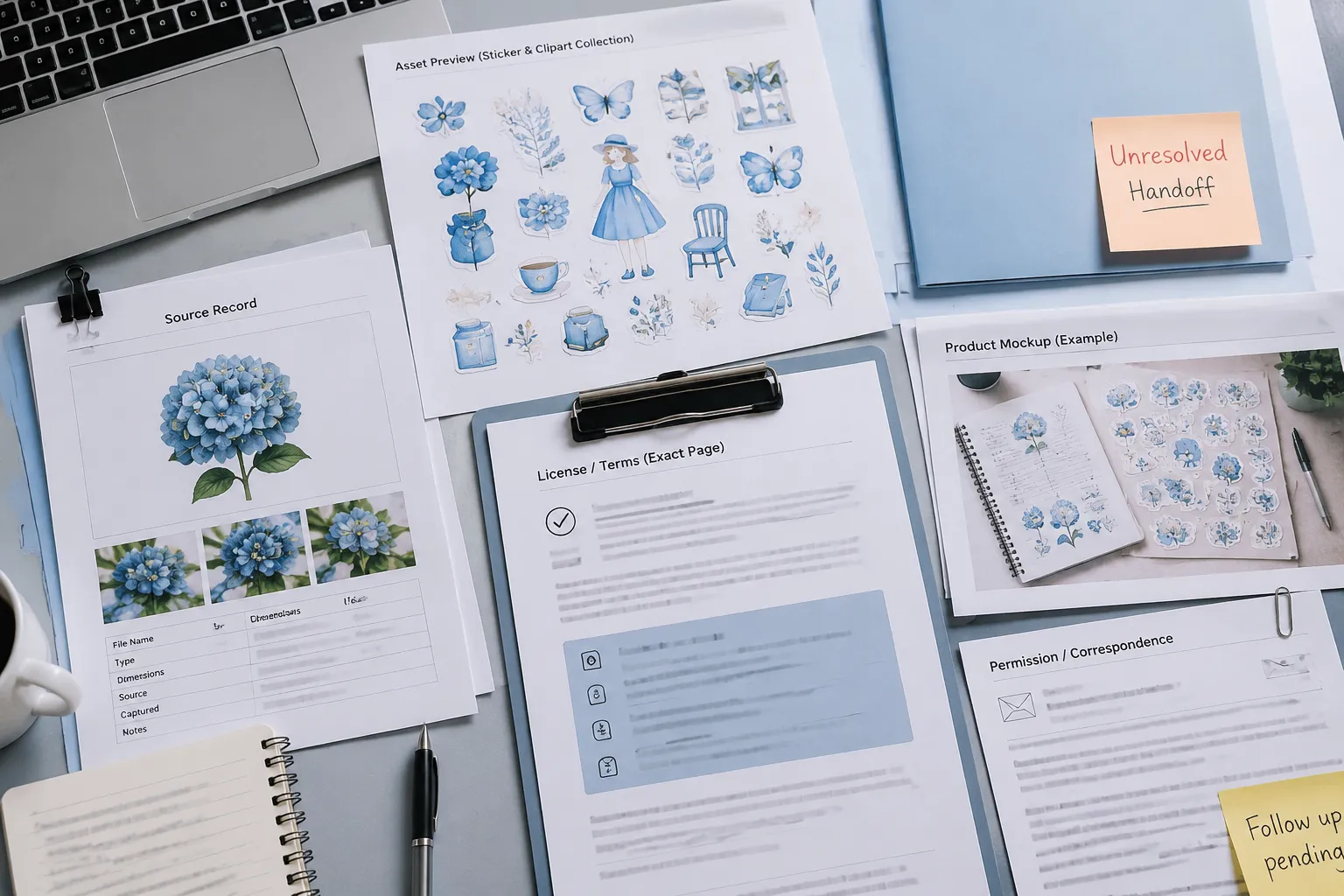
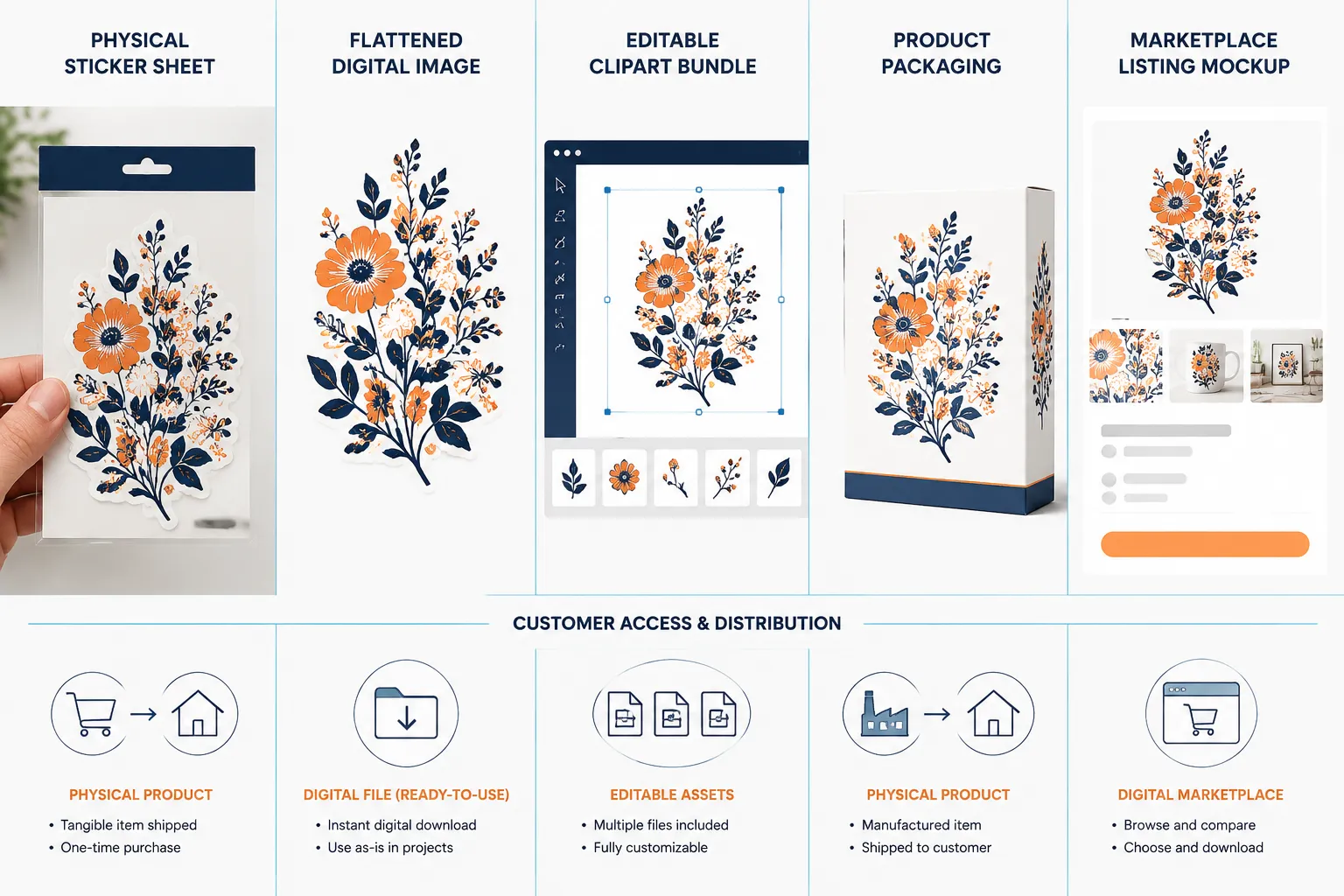
This distinction matters for sticker sheets, die-cut decals, digital clipart bundles, packaging graphics, and listing mockups. An image may be suitable for a private concept sheet while remaining unresolved for a product sold in quantity or a download containing reusable files.
A license label is evidence, not a complete answer. The decisive test is whether the recorded authorization addresses the exact asset, planned modifications, product format, distribution method, and commercial context.
More specific pages
These pages continue the topic in smaller, more specific directions.
What changes the commercial use permission answer
A review should compare the same variables each time. Separating them prevents a broad source statement from being treated as permission for a use it never described.
The exact asset
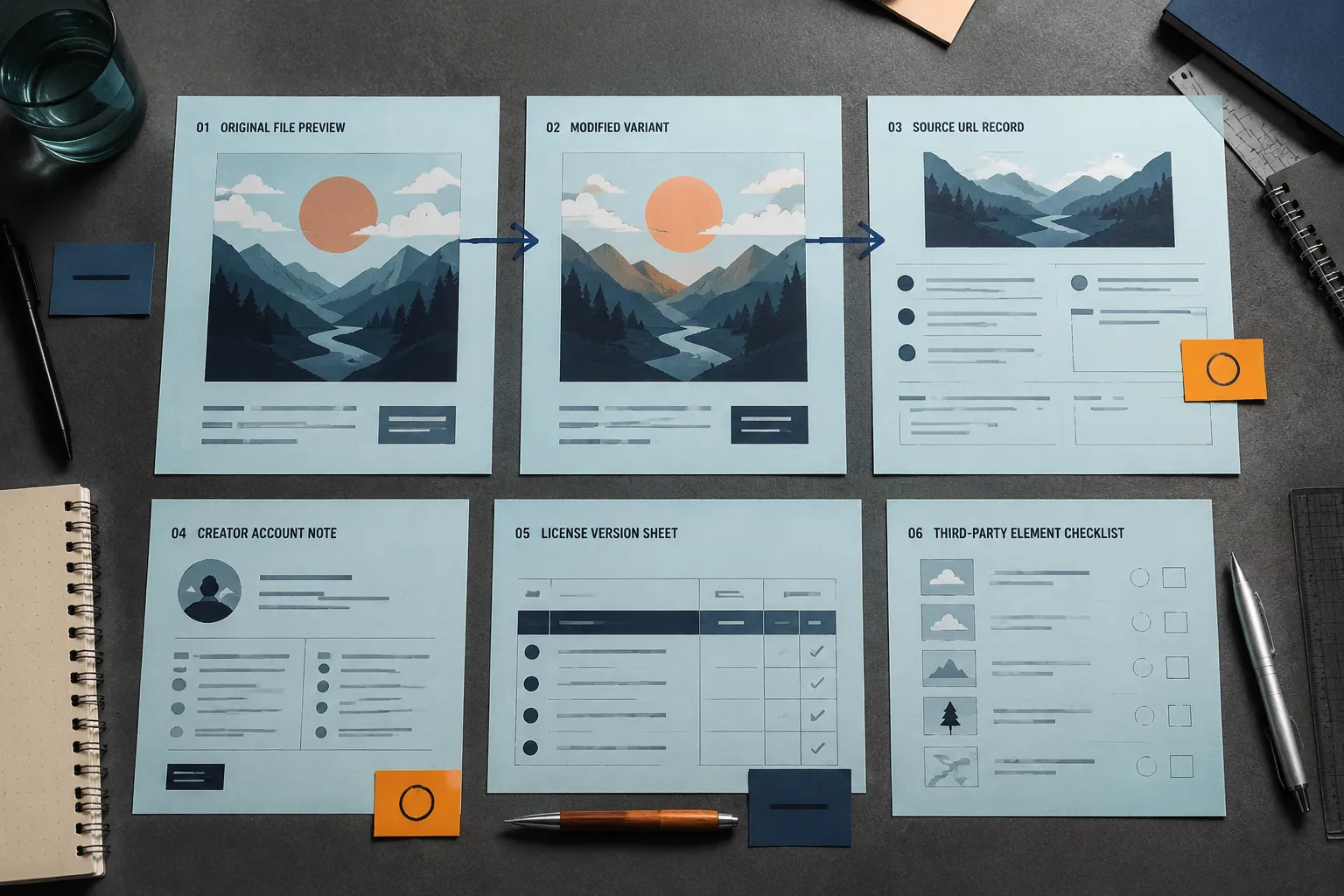
Record the supplied title or filename, a stable visual identifier, the source location, the access date, and the downloaded file type. Note the named creator, uploader, publisher, or account, along with any visible credit, watermark, metadata, or rights notice.
Keep the original asset distinct from recolored, traced, cropped, or otherwise modified files. Adaptation and redistribution conditions may apply differently to the working version.
The license name and version
Entries such as “Creative Commons,” “commercial license,” or “free to use” are too broad. Preserve the complete license name, version, source wording, and any license document supplied with the file.
Creative Commons conditions address different questions. Attribution concerns credit, ShareAlike may affect the licensing of adaptations, NonCommercial limits permitted purposes, and NoDerivatives concerns sharing adapted material. The exact legal code and version should be checked rather than replaced with a remembered summary.
The intended use
“Can I use this commercially?” leaves important details unstated. Describe the asset’s role, product format, modifications, customer access, sales context, promotional use, and distribution method.
- State whether the asset is an anchor motif, supporting motif, border, background, or decorative element.
- Name the physical or digital product in which it will appear.
- Distinguish flattened output from editable or extractable source files.
- Record planned recoloring, cropping, tracing, animation, or combination with text.
- Include listing images, advertising, packaging, and promotional posts where relevant.
- Note whether the required attribution can remain visible in the intended format.
An illustration printed on a sticker is one use. Supplying the same illustration inside an editable clipart bundle is another. Record both when both are planned.
The source and apparent rights holder
An uploader and a copyright owner may be the same person, but the source page alone does not establish that relationship. Separate who created the work, who distributed it, who supplied the license, and who appears able to answer the permission request.
A marketplace listing, account name, or purchase receipt may support the source record. None automatically confirms control of every relevant right.
Third-party elements
A license attached to the main work may not address everything visible within it. Inspect separate credits, contributed photographs, fonts, textures, logos, recognizable people, characters, and files excluded from a bundle-wide notice.
Do not extend a general license badge to material that the source excludes or leaves unaddressed.
Keep stated terms and planned use in separate fields
Permission records become unreliable when source wording and reviewer conclusions occupy the same field. “Commercial use allowed” could be copied from a product page, inferred by a reviewer, or stated in direct correspondence. Those are different records.
| Record area | Include | Exclude |
|---|---|---|
| Stated terms | Exact license label, version, conditions, attribution text, and source wording | Assumptions about what the terms probably mean |
| Intended use | Product format, modifications, sales context, promotion, distribution, and source-file access | Broad descriptions such as “for my business” |
| Unanswered questions | Missing authority information, unclear conditions, third-party material, or conflicting notices | A premature approval or rejection |
| Escalation status | Inquiry drafted or sent, response received, further review requested, use revised, or asset held | An undocumented impression |
This structure lets another reviewer distinguish source evidence from the proposed product and the conclusions still awaiting support.
Where noncommercial language causes confusion
“Noncommercial,” “nonprofit,” “not sold separately,” and “personal use” are not interchangeable. Creative Commons describes NonCommercial by reference to uses primarily intended for or directed toward commercial advantage or monetary compensation. The exact license terms remain the controlling reference for a Creative Commons license comparison.
A historical U.S.-focused study commissioned by Creative Commons recorded disagreement around advertising, organizations, charitable activity, and indirect revenue. It describes reader interpretations rather than setting a legal test, but it helps explain why casual labels fail during handoff.
The following plans should remain unresolved until the applicable terms or a permission response address them:
- A free download used to attract customers to paid products
- Artwork displayed beside advertising or sponsored content
- A motif included as a bonus with a paid sticker pack
- An asset incorporated into packaging for products sold
- A community project that also distributes merchandise
- A clipart element supplied in files from which customers can extract it
- An internal mockup later reused in a public product listing
Do not settle these situations by asking only whether the asset has a separate price. Record the complete product distribution use.
Build a reviewable permission inquiry packet
A Commercial-Use Permission Inquiry Packet for an Ambiguous Asset License should let the recipient understand the proposed use without reconstructing it from scattered messages. It should also remain usable when the response is partial.
1. Capture the asset and existing authorization
Start with one asset or one consistently licensed group. Include its identifier, source details, small preview, license name and version, purchase terms, receipt language, included rights file, and relevant correspondence.
Summarize conditions in a separate field. Mark commercial use, attribution, modification, redistribution, downstream licensing, quantity, channel, territory, and duration as stated, not stated, or conflicting. “Not stated” is not the same as “allowed.”
2. Describe the concrete use
Describe the pack as currently planned. For example, a floral illustration might be recolored, combined with original lettering, printed as a supporting motif on a physical sticker sheet, shown in listing images, and excluded from customer-accessible source files.
If two formats are under consideration, separate them. A physical-only release and an editable digital bundle may produce different answers.
3. Ask questions tied to the gap
- Does the stated permission address this product and distribution method?
- Are the planned modifications included?
- May the asset appear in paid-product listings and related advertising?
- Can customers receive a flattened file containing the asset?
- Can customers receive an editable or extractable version?
- What attribution is required for physical products and digital listings?
- Does the respondent control the rights needed for the stated authorization?
- Are any visible elements excluded?
- Do quantity, channel, duration, or territory limits apply?
Keep every question attached to the identified asset and described use. Sending an inquiry does not itself change the permission status.
4. Preserve the response in context
Record the respondent’s identity, stated relationship to the asset, response date, described use, conditions, exclusions, attribution wording, and remaining questions. Preserve the complete message chain so that a short answer remains connected to what it answered.
Subject: Permission request for identified asset and product use
I am reviewing the asset identified below for a planned commercial product. The source displays the following license or permission statement.
Asset: [title, filename, or visual identifier]
Creator or source account: [name as displayed]
License name and version: [exact label, if available]
Planned product: [specific format]
Planned changes: [changes or none]
Distribution: [physical, flattened digital, editable, listing, or advertising use]
Attribution plan: [where credit can appear]Please state which described uses, if any, you authorize and identify any attribution, modification, distribution, quantity, channel, duration, or excluded-element conditions.
This draft organizes the request. It does not establish the respondent’s authority or resolve rights not covered by the response.
Compare records against the same use
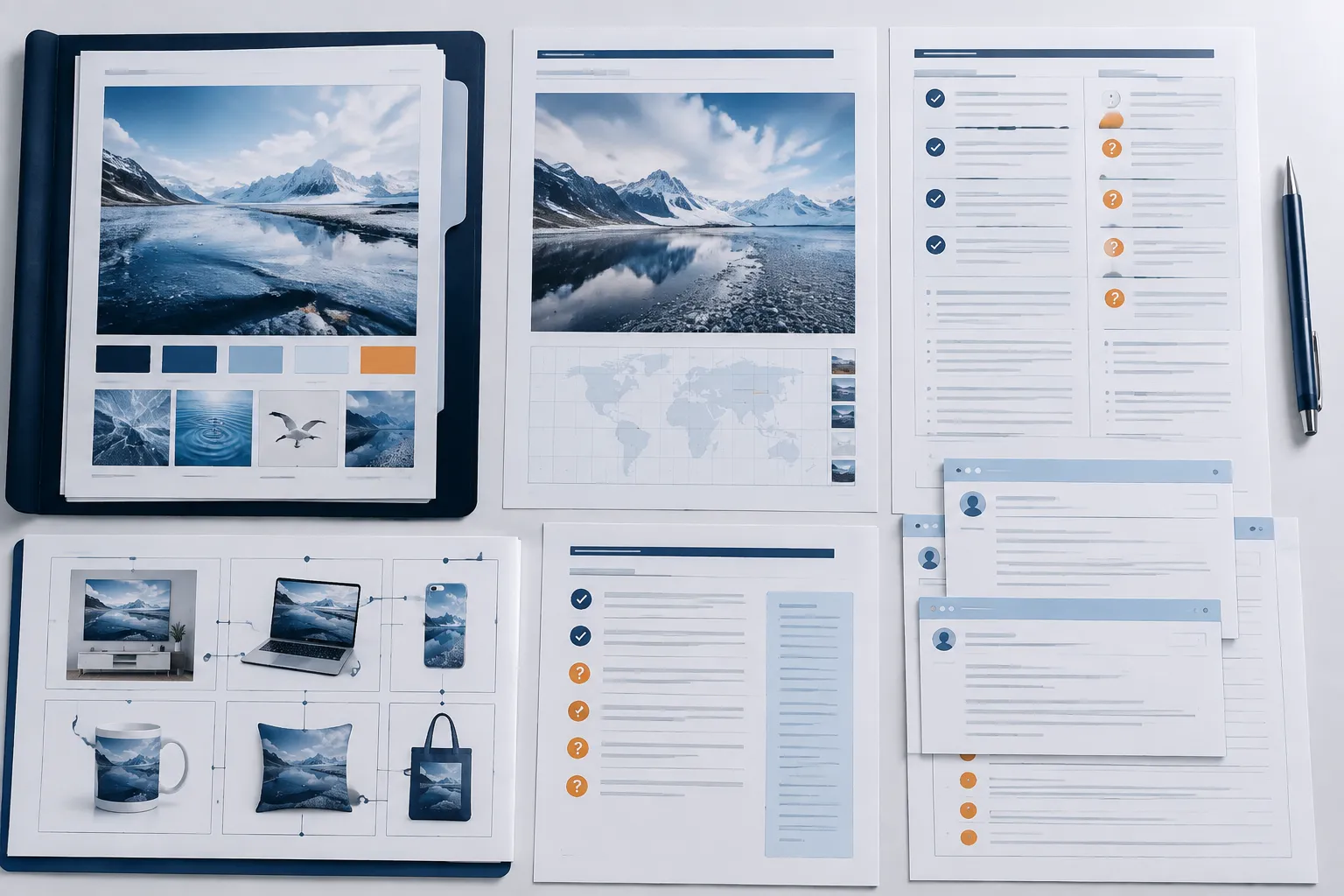
| Record | What it contributes | What remains open |
|---|---|---|
| License label without source detail | Names a set of stated conditions | Who applied it, provenance, and third-party material |
| Purchase receipt without use conditions | Confirms a transaction and may locate attached terms | Modification, redistribution, attribution, and product scope |
| General commercial-use statement | Addresses commercial activity at a broad level | Editable files, advertising, redistribution, and other unstated contexts |
| Versioned Creative Commons license | Provides structured conditions for comparison | Provenance, excluded elements, and fit with the exact use |
| Direct written permission | May answer a described use for an identified asset | Respondent authority, omitted formats, conflicts, and added conditions |
Use handoff statuses that explain the next action
A single approved-or-rejected field hides the work between those endpoints. Use a compact status with a date and reason.
- Source captured: Asset and source details are recorded; conditions have not been compared.
- Terms under review: The stated license is known; its fit with the intended use remains open.
- Inquiry required: Existing authorization does not address a material variable.
- Inquiry sent: The recipient, date, use description, and questions are recorded.
- Response incomplete: Ownership, scope, conditions, or exclusions remain unclear.
- Separate permission indicated: Another rights holder or excluded element is involved.
- Further review required: The issue depends on jurisdiction, conflicting claims, platform rules, or another question outside the record.
- Use revised: The product or distribution plan changed to match a documented condition.
- Asset held: The asset remains outside production and listing files.
- Asset replaced: Another asset is used under its own source record.
Carry the status into the motif inventory, concept sheets, working exports, cut-line files, packaging drafts, mockups, listing images, bundle manifests, and release checklist. A polished preview must not conceal an unresolved source record.

Recurring handoff failures
Access is treated as permission
A public post, download, search result, or shared folder shows availability. Record the source terms and proposed use separately.
Attribution is treated as the only condition
Credit does not replace checks for commercial purpose, modification, redistribution, or downstream licensing.
The product is described too broadly
Words such as “merchandise” or “business use” hide decisive variables. Name the format, customer access, modifications, sales channel, and promotional context.
The response is separated from the question
A short reply loses meaning without the use description it answered. Retain the inquiry, attachments, response, dates, and later revisions together.
No response is treated as a decision
An unanswered request leaves the question open. Hold the asset, revise the use, replace it, or route the record for appropriate review.
Evidence boundary for a specific asset
Public references support general permission procedure and Creative Commons terminology. They do not establish ownership of a particular asset, confirm that an uploader controls embedded rights, or determine the outcome for a specific product, marketplace, or jurisdiction.
Before completing the handoff, inspect the current source page, exact license name and version, associated terms, complete correspondence, third-party elements, and any marketplace requirements affecting the planned release. Asset-specific or jurisdiction-specific questions may require further review beyond the source record.
Complete the commercial use handoff
The review lane is complete when another person can reconstruct the decision without guessing. The record should connect the exact asset, stated terms, planned modifications, product and distribution formats, attribution plan, third-party elements, unresolved question, correspondence history, current status, and next responsible action.
The handoff does not need to manufacture certainty. It needs to preserve the available evidence, expose the remaining gap, and prevent the asset from advancing as though the decision had already been made.